The theory of parity: when nature looks in the mirror
Discover the article
The «Mathilda effect» refers to the tendency to minimize or erase women's contributions in science,
for the benefit of their male colleagues.
By Sacha Martin
On 10/20/2025 - 2 min of reading
Longtemps passé sous silence, ce phénomène est aujourd’hui réexaminé à la lumière des nouveaux
outils de reconnaissance
et de réhabilitation. À l’ère du numérique et de la conscience féministe accrue, la mémoire
scientifique s’écrit
autrement.
Les initiatives se multiplient : bases de données
collaboratives, projets de recherche en histoire des sciences,
expositions et documentaires redonnent une voix à celles qu’on a oubliées.
Les universités, quant à elles, réévaluent les archives pour attribuer à certaines chercheuses la
paternité — ou plutôt
la maternité — d’inventions et de découvertes injustement spoliées. Le numérique joue ici un rôle
central : les
plateformes ouvertes permettent de diffuser largement ces savoirs réhabilités, tandis que les
réseaux sociaux deviennent
des espaces de transmission et de reconnaissance. La création et le développement du secteur du
cinéma et des séries
permettent de mettre en lumière certain cas important. Vous retrouverez ci-dessous une galerie de
film et de série
retraçant, des histoires de femmes invisibilisés
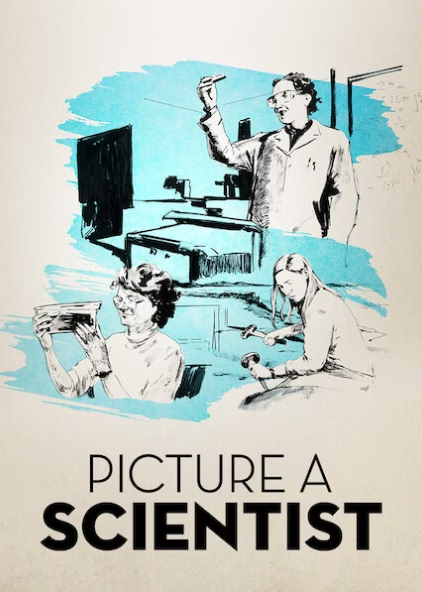
Poster for the documentary Picture a scientist
The documentary Picture a Scientist is a striking example: broadcast on several digital platforms,
it tells the story of women scientists facing invisibility and discrimination in the academic
environment. This film fully participates in the rehabilitation of the researchers by making their
experiences and contributions visible. You will find below a gallery of films and series retracing
stories of long-forgotten women.
You will find below the trailer of the documentary:
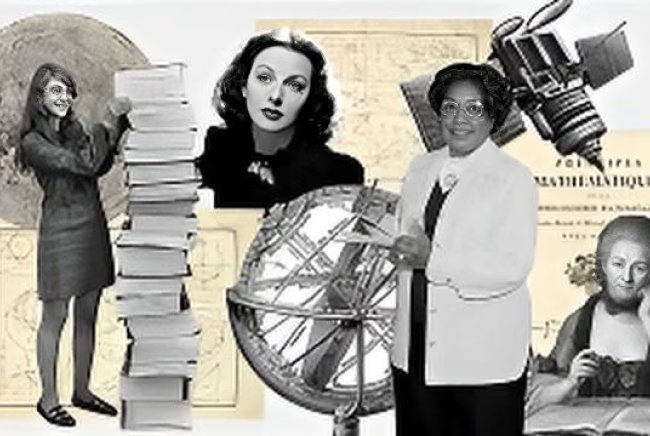
Portrait of pioneering women who have marked the history of
science and technology.
Law, too, is emerging as a new instrument of symbolic reparation. By promoting policies of equality
in research and
publication, it contributes to correcting a history written in the masculine.
Laws on parity in scientific bodies, prizes reserved for female researchers or the revision of
patent allocation
protocols are part of this dynamic.
Rehabilitating is no longer just about rediscovering forgotten figures, but to deeply transform the
mechanisms of
scientific recognition.
By giving women their rightful place, society does not only correct a past injustice: it enriches
the present with a
plurality of voices, experiences and knowledge essential for thinking about the future.